

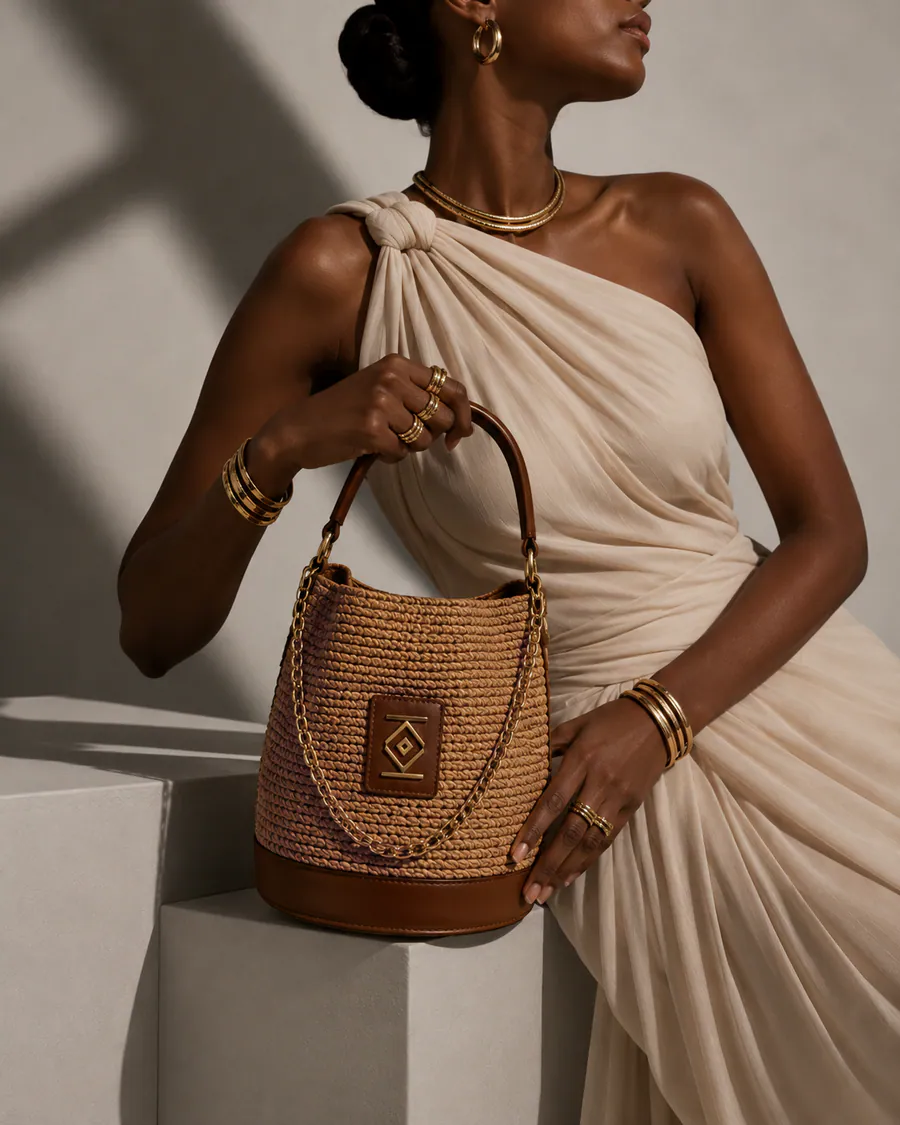
Ravina-“leaf”
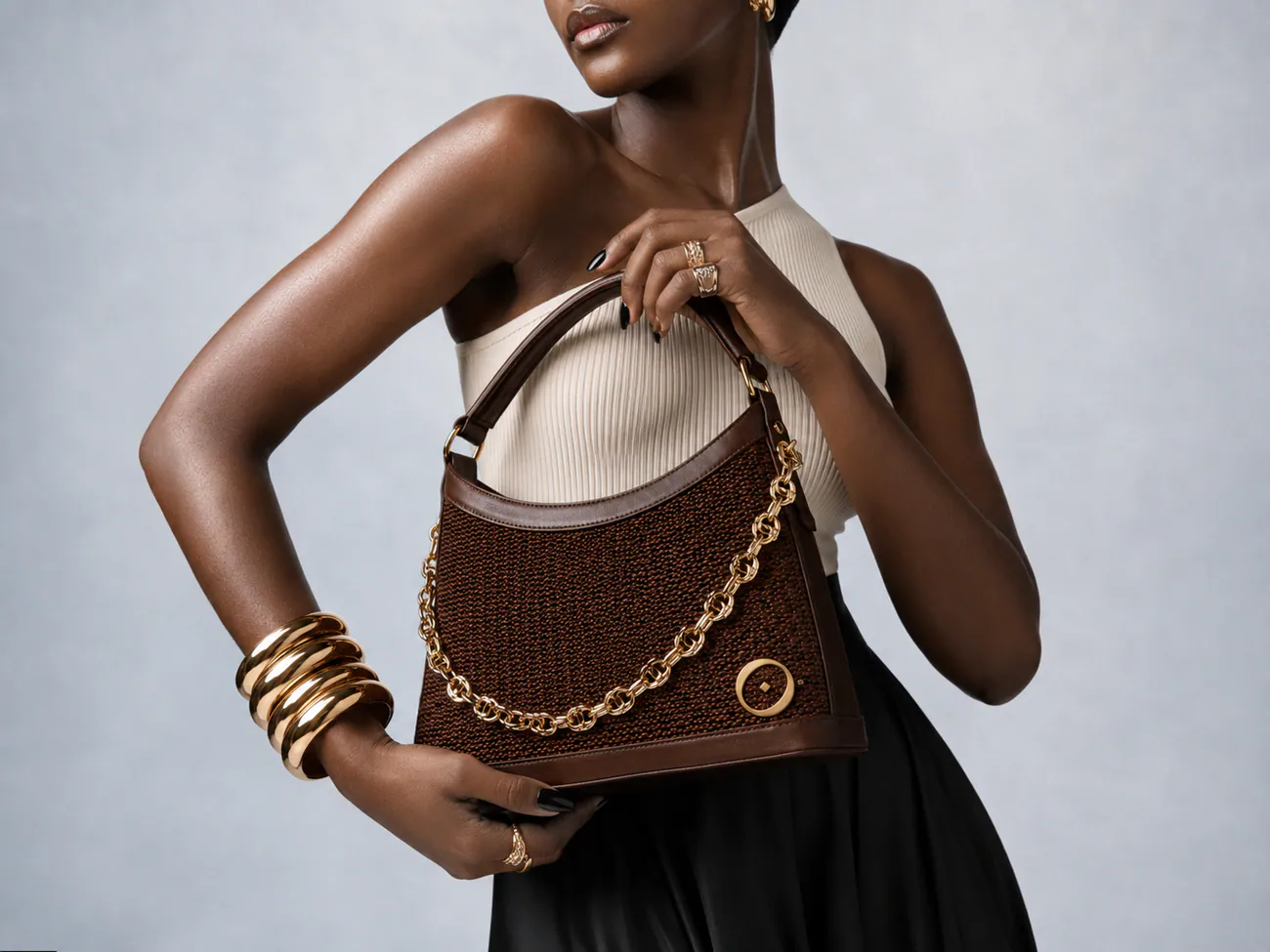
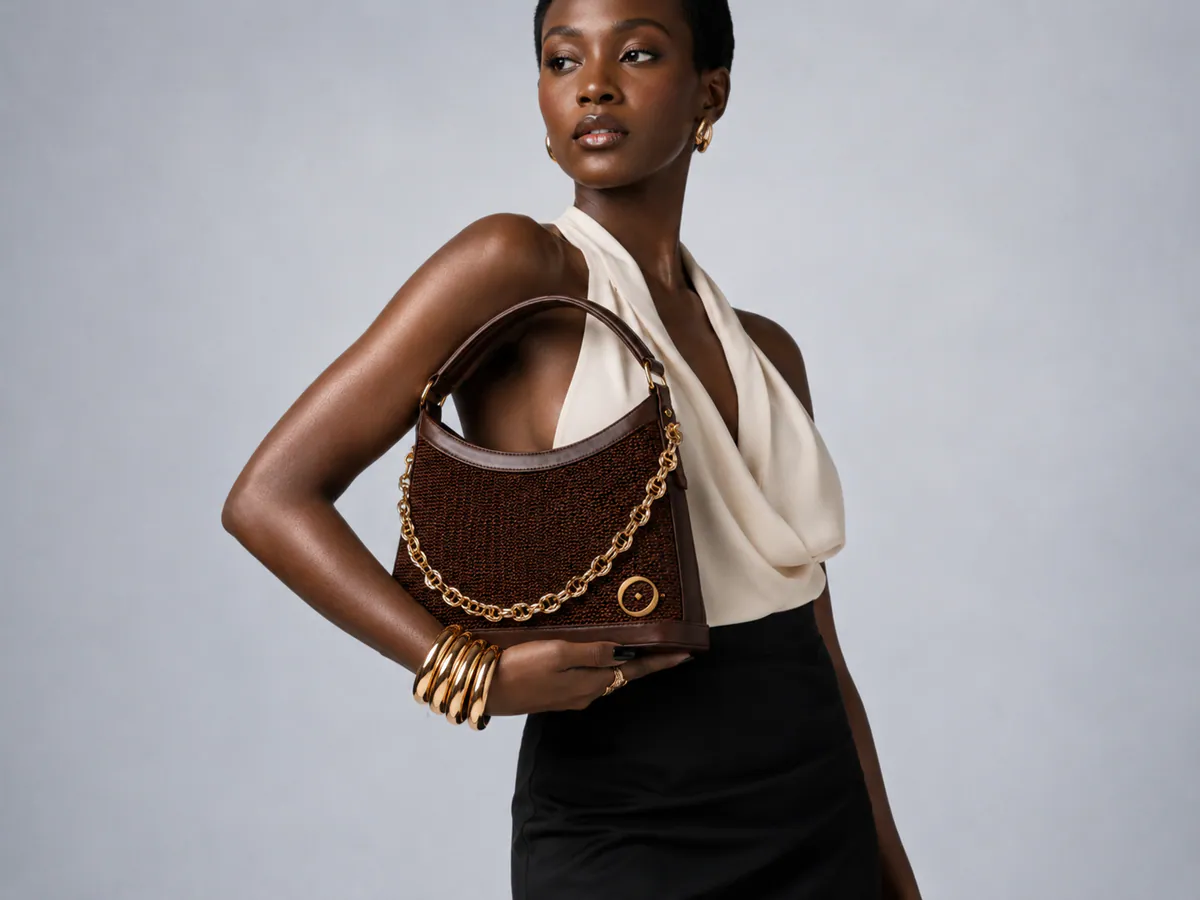
A bucket that keeps its shape without a frame — the weave does the work.


Raffia is a Malagasy word. It names the palm, and the fibre drawn from its leaves. We work that fibre by hand into bags built to outlast a season.

The material

The raffia palm carries the longest leaves of any plant on earth. We take the young ones, and never more than the tree can spare.
Each leaf is split into strands no wider than a shoelace, sun-dried until it holds its colour, then hooked stitch by stitch. A single shoulder bag takes an artisan the better part of three days.
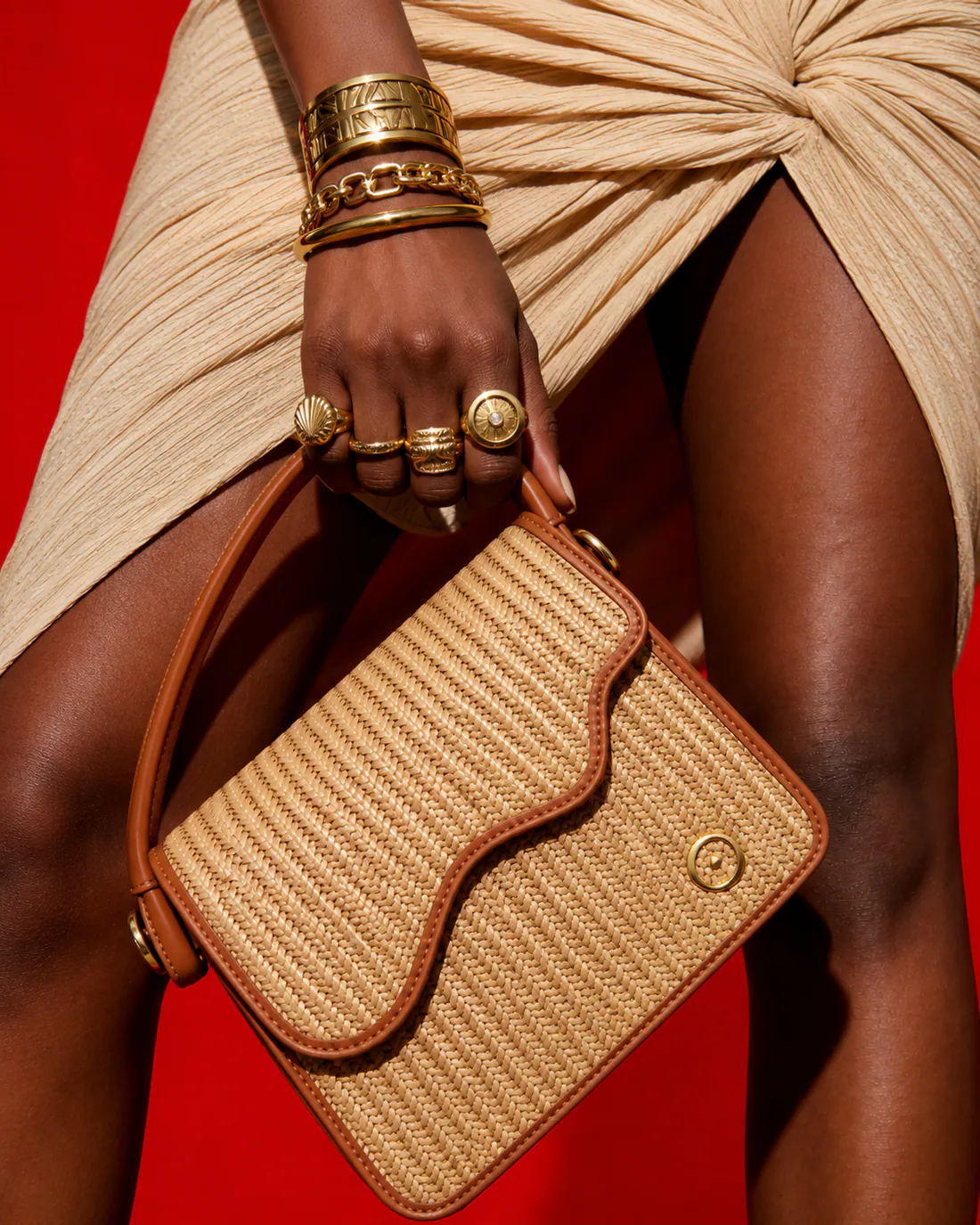
Most Malagasy raffia leaves the island raw. Ours leaves it finished.
The making
Five stages, none of them shortcuts. The order matters — skip the drying and the fibre will never take a dye evenly.
Young shoots are cut from wild palms growing in the wetlands, by collectors who climb each tree by hand.
Leaves are laid out to dry until the green is gone and the fibre has settled into its natural straw tone.
Every leaf is split lengthwise into even strands. Width decides the weave — a fine bag needs a finer strand.
Hooked by hand, row on row, around the form. This is where the shape is decided, not after.
Leather trim, hardware and lining are set by hand in the Antananarivo workshop, then the piece is checked twice.
The collection
Each piece takes its name from the thing it was drawn from. The shop opens later this year — join a waitlist and you will hear before anyone else.
A bucket that keeps its shape without a frame — the weave does the work.
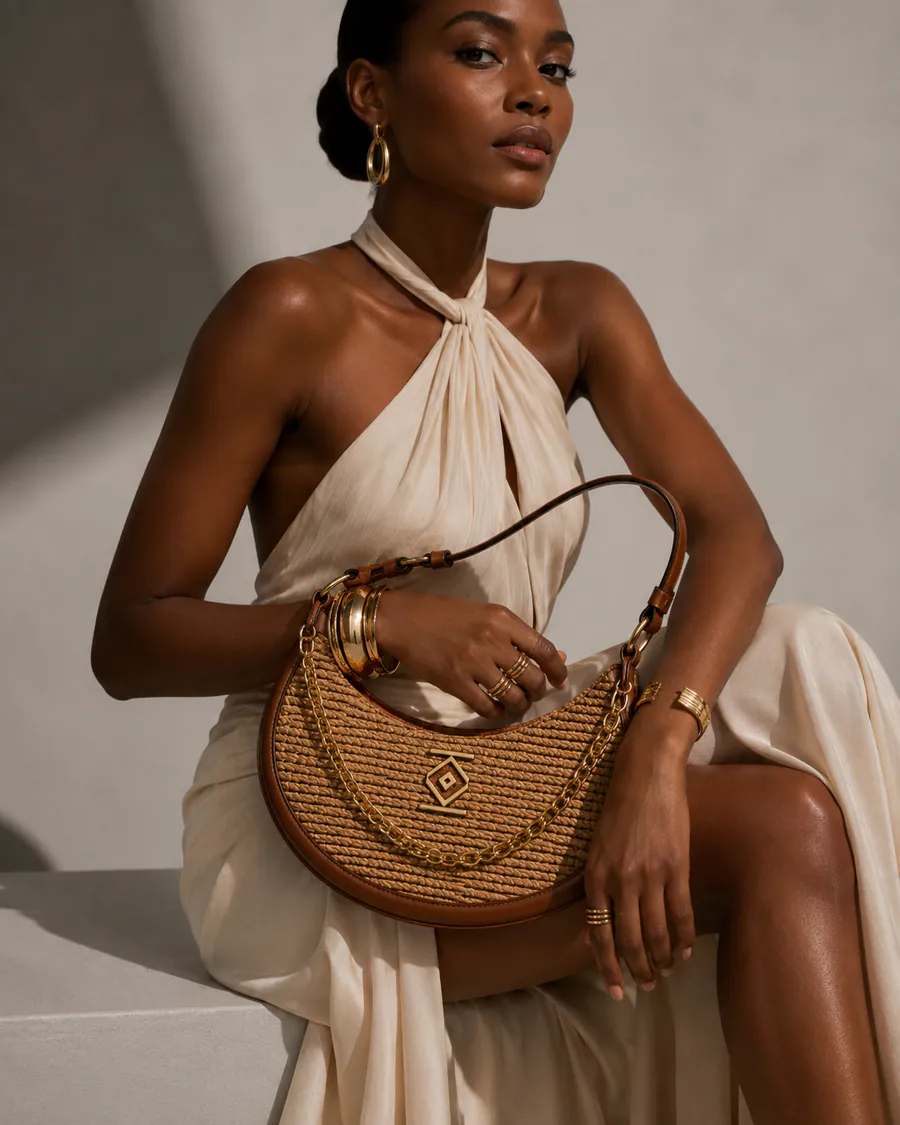
Sits under the arm and stays there.
The chain shortens to a top handle.
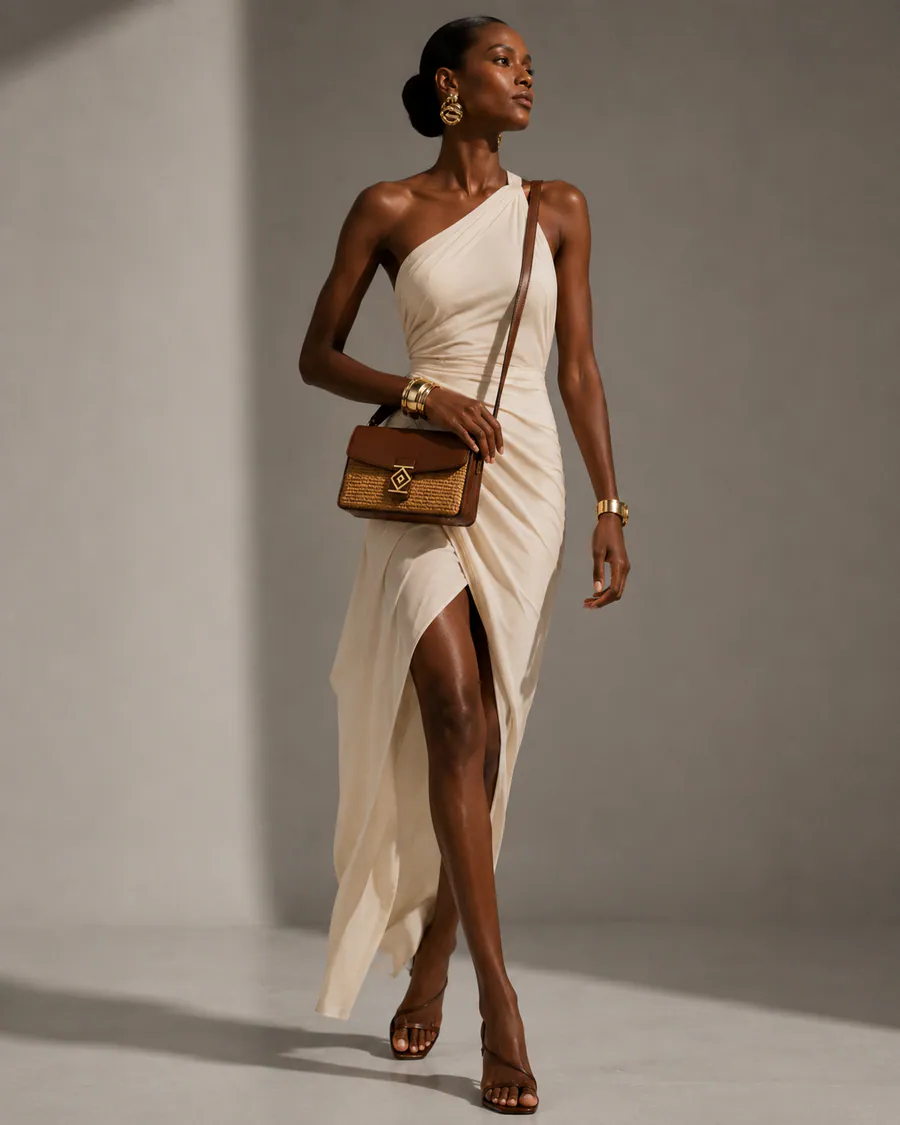
The smallest of the three. Phone, cards, keys, and nothing you did not choose.
The shop


